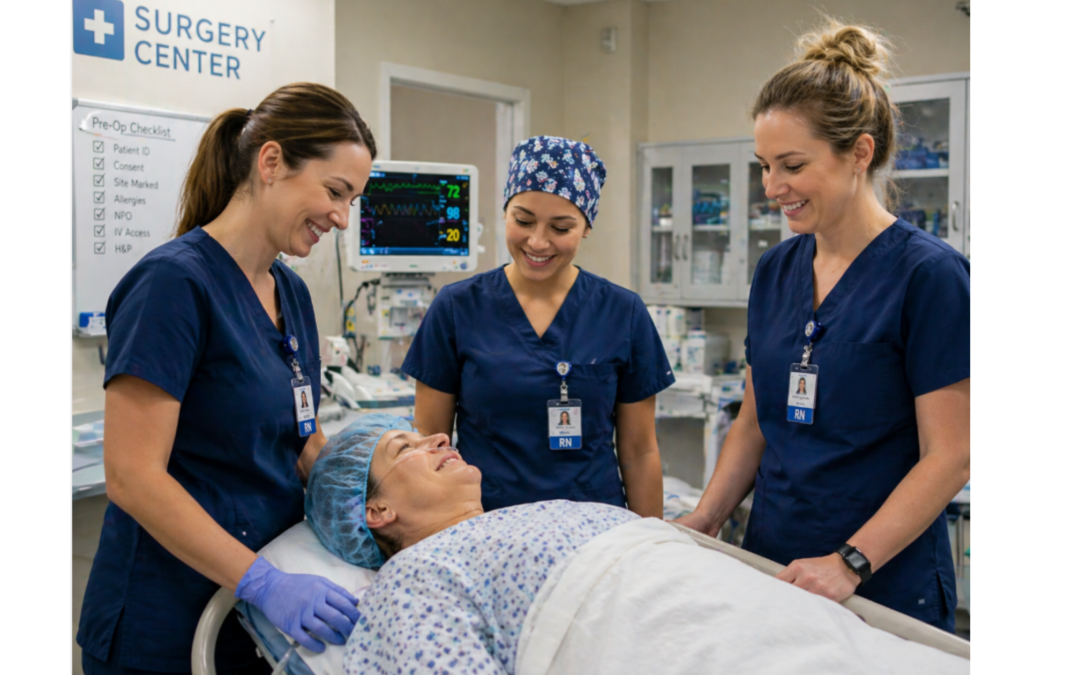
If you’re a nurse working in an ambulatory surgery center, you already know the pace is different. Patients arrive, procedures happen, and turnover is fast. There’s less margin for slow decision-making — and when sedation is involved, the stakes are high.
Ambulatory surgery centers — also called ASCs — have become one of the most common settings for procedures requiring moderate sedation. From colonoscopies and endoscopies to orthopedic and dental procedures, nurses in these environments are often the primary eyes on the sedated patient. That’s a responsibility that deserves proper, focused training.
Here’s what every ASC nurse should know about sedation safety — and how the right education makes all the difference.
The ASC Environment Creates Unique Sedation Challenges
Unlike a hospital operating room where an anesthesiologist is dedicated to the patient, many ASC procedures rely on non-anesthesia providers — including nurses — to monitor sedation. That means you’re tracking vitals, watching the patient’s level of consciousness, managing the sedation continuum, and communicating in real time with the proceduralist.
Add in the high-volume, fast-turnaround nature of most ASCs, and it’s easy to see why structured sedation training isn’t just helpful — it’s essential. Patients can move through the sedation continuum faster than expected, and the ability to recognize that shift early is what separates a smooth procedure from a critical event.
What Safe Sedation Monitoring Actually Looks Like
Monitoring during moderate sedation in an ASC setting isn’t just watching a screen. It’s an active, continuous clinical assessment. Nurses who are well-trained in sedation know to keep a close eye on:
- Level of consciousness and patient responsiveness
- Oxygen saturation and ventilation trends
- Heart rate, blood pressure, and respiratory rate
- Signs of airway compromise or unexpected deepening of sedation
Beyond the numbers, trained nurses also know how to communicate effectively during a procedure — using structured communication frameworks like SBAR to flag concerns quickly and clearly before a situation escalates.
Pre-Procedure Assessment Is Where Safety Starts
One of the most important things a nurse can do for sedation safety happens before the procedure even begins. A thorough pre-sedation assessment helps identify patients who carry higher risk — those with obstructive sleep apnea, obesity, cardiovascular conditions, or a history of adverse reactions to sedation.
Knowing those red flags in advance allows the care team to adjust the plan, prepare additional resources, or consult with anesthesia before the patient is ever on the table. Prevention is always safer than response.
Why Sedation Training Specifically for ASC Nurses Matters
General nursing education covers a lot of ground, but sedation-specific training goes deeper into the pharmacology, the monitoring requirements, the clinical decision-making, and the emergency protocols that ASC nurses encounter in real practice.
The National Sedation Center’s online certification programs are built exactly for this — non-anesthesia providers who are responsible for sedation care outside the operating room. Courses like the Adult Moderate Sedation certification and the Foundational Knowledge course are designed to be practical, evidence-based, and directly applicable to what nurses face in an ASC environment every day.
And because the courses are fully online, ASC nurses can complete training without stepping away from their unit or adjusting their schedule around a classroom.
Ready to Strengthen Your Sedation Skills?
ASC nurses are on the front line of sedation safety. The right training gives you the knowledge, confidence, and clinical tools to protect every patient in your care — from the pre-procedure assessment all the way through recovery.
➤ Explore Sedation Training for Nurses & ASCs — Browse certification courses at www.nationalsedationcenter.com
➤ Explore Compliance Education — Stay current with the standards your ASC requires.